zaterdag 20 november 2010

Top selling counterfeit products


I think it’s very interesting to know which kind of products are frequently counterfeit. Counterfeiting  happens very frequently with Cucci Handbags, MP3 players, jeans, electrical cords, sneakers, sunglasses,… A lot of people buy the counterfeit products, although it’s very easy to recognize when it’s a fake product. You can notice for instance that some labels are missing, the printing is unclear, the handbag has loose threads, … The reason why nevertheless so many people buy the counterfeit products is of course because the price they have to pay is so much lower than the price of the real product.
They also have investigated how and where the counterfeit products were sold to the people and where all these products were produced.  Scott Wolfson, a spokesman for the consumer Product Safety Commission, assumed that it was exceptional for counterfeit product to be sold in well-known walk-in stores,  but rather vendors who are peddling counterfeit products on the city streets. Most of the counterfeit products in the U.S. came from China.

Kristof Buffel

Taiwan to clamp down on Chinese counterfeit products bearing Taiwanese labels


China is well-known as the mainland for counterfeit products, also Taiwan suffers by these Chinese counterfeit products because these products often bear a label with ‘Made in Taiwan’. The Vice Minister of Economic Affairs of Taiwan said that they have formed a special research team to crackdown on commercial piracy. The government of Taiwan will try to provide each local product with the ‘MIT’ quality mark. Hopefully it’s a good solution to solve the problem, because the economy is very important for Taiwan, well-known in the entirely world as one of the best producers of computer and television screens.

I think that it will be difficult to stop China from making counterfeit products, but providing products with a quality mark is a beginning. Unfortunately it’s a disadvantage for the economy of other countries and it entails political tensions between China and the other countries, for instance Taiwan where there are already political tensions because China does not accept Taiwan’s independence stance.


Kristof Buffel

http://www.theepochtimes.com/n2/content/view/36138/

vrijdag 19 november 2010

WHO launches taskforce to fight counterfeit drugs


The most dangerous counterfeit products are counterfeit medical products, such as counterfeit drugs and vaccines.  In 2006, the WHO started a taskforce to fight against the illegal trade of counterfeit medical products because every year thousands of people die due to the use of these products. They want to help people become more familiar with the growing market of counterfeit medicines and the health risks they cause. The taskforce tries to help governments to stop the corruption in the sections of the police charged with the fight against counterfeit medicines. They also ask the drug manufactures to make their products more complicated. It seems that now counterfeit drugs are really easy to fake. In developing countries, one in four packets of medicine you buy in street markets could be fake. When you look at some countries in Africa, the drugs are sold between the fruit and the vegetables on the large open-air markets. There, the major problem is that they just don’t have another place to buy these products for the price they can afford.

(http://www.scielosp.org/scielo.php?pid=S0042-96862006000900005&script=sci_arttext&tlng=en)

Ivo De Clercq

woensdag 17 november 2010

MSU spearheads research to prevent counterfeit products


In the US there is set up a team, consisting of various researchers from departments at MSU (Michigan State University) or other colleges, who has as aim to combat counterfeit products. They work also together  with officials from technology and automobile parts manufactures and the FBI to attempt a reduction of counterfeiting. That’s why their program calls A-CAPPP that stands for Anti-counterfeiting and product protection.
Wilson, an associate professor of criminal justice and A-Cappp’s director, sees how important the problem is because counterfeiting has a huge social and economical impact. He estimates the worldwide market for counterfeit products at a rough $600 billion and emphasizes the danger of counterfeit pharmaceuticals.  But how can they protect the public from all those counterfeit products?
At first the team will search as much as possible information about the counterfeit products in the U.S ,which they will collect in a database and then  try to indentify criminal patterns.  Another and more practical way to combat counterfeit products is through  the use of biosensors implanted into the products that prove their legitimacy. Hopefully the team will find some good solutions to combat counterfeit products…
Kristof Buffel


http://www.statenews.com/index.php/article/2010/02/msu_spearheads_research_to_prevent_counterfeit_products

Google making millions from advertising counterfeit goods


On the Google website, the biggest search engine in the World, you have the possibility to advertise your products somewhere on the website. A company wanting to do so has to pay a price to Google every time someone clicks on the advertisement. Now the problem is that apparently Google advertises websites that are selling counterfeit products. The websites are, most of the time, not legitimate which I would not expect from the ‘trusted platform’ Google. When such a website pays €4 to Google every time someone clicks on the advertisement, Google is making millions in an illegal way. According to a spokesman from Google, they have strict terms and conditions to allow adverts. If they discover an advert referring to counterfeit goods, they take it down immediately. I think that Google allows websites between legal and illegal just to make some more profits. Police’s e-crime units already closed down thousands of these websites but in an hour, they just reappear.

(http://technology.timesonline.co.uk/tol/news/tech_and_web/the_web/article6981227.ece)

Ivo De Clercq

maandag 15 november 2010

Fake and counterfeit goods promote unethical behaviour


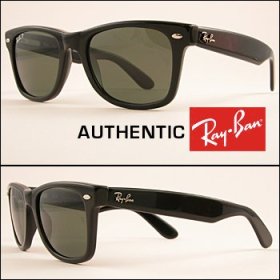
When you wear a fake Ray-Ban sunglasses or a replica Gucci handbag, you want to show yourself wealthier than you actually are. Beside this richer lifestyle, a study of the University of North Carolina has shown that these kinds of counterfeit products can lead people to unethical behaviour. They cheat when they fill in a test and behave dishonestly, but they have no idea of this impact coming from these counterfeit products. For the experiments, some people were told that they were going to wear a fake pair of designer sunglasses but in fact the sunglasses were real. The experiments showed for example that such a person cheated on a test to gain more money. Furthermore the actions of others are interpreted by people wearing fake goods as dishonestly or unethically all the time. Francesca Gino, who did the experiments, said that buyers of counterfeit products for themselves actually pay a price for the morality of the rest of their life.

(http://blogs.discovermagazine.com/notrocketscience/2010/04/09/fake-and-counterfeit-goods-promote-unethical-behaviour/)

Ivo De Clercq

technogy and counterfeit products

Where ever you go in the world , you will always find a counterfeit product. Even when you are at home , you can bump into counterfeit products by surfing on the world-wide web. The business in counterfeit products is enormous and the most of these products are damaging for a lot of people and firms. Can this business be stopped in a way?

Yes and no. Some enterprises who produces goods which are technological stunts,such as Microsoft, can fight counterfeit products with technology such. Other companies that are producing luxery goods such as handbags must find another way to fight counterfeit products. Microsoft can prove the authentication of its products by checking if it's real or fake. The persons who downloaded the fake version will then receive a warning from Microsoft. Microsoft also fights cloning, this is coping information so that their software would look real, by installing firewalls. Technology can also be used for the recognition of real medecins by scanning barcodes that are attached to the medecins.

However, technolgy evolves... on both sides. Companies will be forced to keep developping new technologies to be one step ahead of those who develop counterfeit products. It's a never-ending battle.

Mathieu De Meulemeester

http://www.spotcounterfeits.co.uk/technology-can-beat-counterfeiting.html